
P37 Portable Drone Detection & Localization System
Detect, identify, track, and locate drones and remote pilots from one rapidly deployable portable system.
P37 combines 100 MHz-6 GHz spectrum monitoring and protocol analysis with drone identification, position and flight-trajectory display, Remote ID reception, whitelist and blacklist management, electronic geofencing alerts, and remote-pilot location awareness for supported UAV signals.
P37 is a detection, localization, and situational-awareness system; it does not provide RF countermeasure functions.
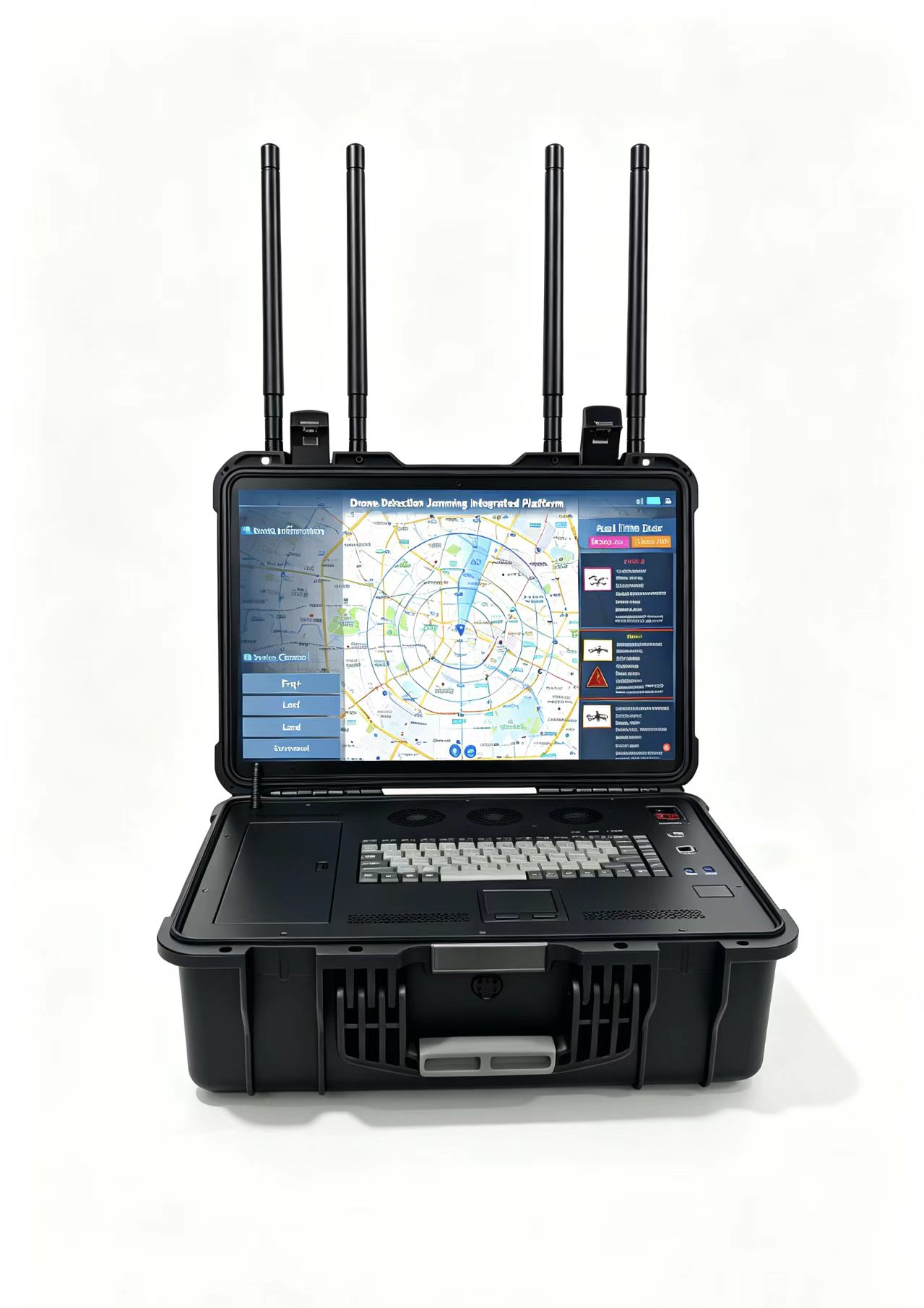
P37 is designed for drone detection, identification, flight-trajectory monitoring, and location awareness. It does not transmit RF countermeasure signals. Available drone and remote-pilot position data depends on the target model, supported protocol or Remote ID signal, terrain, line of sight, and surrounding electromagnetic environment.
A portable operating picture for drones, flight paths, and remote pilots.
P37 is a portable drone detection and localization system built for rapid deployment in complex electromagnetic environments. It combines wideband spectrum monitoring with protocol analysis to discover and identify supported UAV signals.
When supported signal data is available, the system can display drone identity, position, flight trajectory, and remote-pilot location information in real time. Whitelist and blacklist management helps operators distinguish approved, known, and unknown activity within the monitored area.
Electronic geofencing alerts support protected-area monitoring, while the portable case design enables field teams to establish an on-site detection point without a permanent installation. P37 is intended for detection and situational awareness, not RF suppression or navigation countermeasure transmission.
Portable drone detection and localization system
Detection / Identification / Trajectory / Pilot Location
Rapid-deployment portable case system
From RF signal discovery to an actionable low-altitude picture.
P37 combines RF monitoring, protocol-level identification, position data, trajectory display, and remote-pilot location awareness in one portable workflow. The information available depends on the detected signal and supported UAV protocol.
Monitor Spectrum
Monitor supported RF activity across the 100 MHz-6 GHz operating range for drone-related spectrum and protocol characteristics.
Detect & Identify
Analyze available signals to detect UAV activity and identify the model, serial number, or Remote ID information where supported.
Locate & Track
Display available drone position and flight trajectory data, with remote-pilot location information for supported signal types.
Assess & Alert
Apply whitelist, blacklist, and electronic geofencing rules to help operators assess activity and generate real-time security alerts.
Turn detected UAV signals into a location-aware operating picture.
P37 combines wideband RF monitoring, protocol-level identification, position and trajectory display, remote-pilot location awareness, Remote ID reception, and zone-based alerts in a portable case system.
Wideband Spectrum Detection
Monitors supported drone-related RF activity across the operating spectrum and applies signal analysis for target discovery in complex electromagnetic environments.
Protocol Analysis & Target Identification
Uses available protocol data to identify supported UAV information, including model and serial-number details where they are carried by the detected signal.
Drone Position & Flight-Trajectory Display
Presents available drone position and flight-path information in real time so operators can follow target movement within the monitored low-altitude area.
Remote-Pilot Location Awareness
Displays available remote-pilot position information for supported UAV protocols, helping field teams assess both the aircraft and its likely point of control.
Remote ID & Zone-Based Alerts
Receives supported Remote ID information and combines it with whitelist/blacklist management and electronic geofencing rules for protected-area monitoring.
Multi-Target & Rapid-Deployment Operation
The battery-powered portable case can be deployed quickly for field monitoring and supports simultaneous awareness of multiple detected UAV targets.
P37 provides detection, identification, localization, and situational awareness functions only. Available serial number, model, position, trajectory, Remote ID, and remote-pilot information depends on the target model, transmitted protocol, signal conditions, terrain, line of sight, electromagnetic environment, and system configuration.
P37 system specifications.
Review the standard P37 configuration for portable RF detection, protocol analysis, target identification, trajectory monitoring, Remote ID reception, and location awareness. Final performance depends on the target, supported signal, terrain, electromagnetic environment, and system configuration.
P37
Drone detection, identification, flight-trajectory monitoring, and remote-pilot location awareness in a portable case platform.
- 100 MHz-6 GHz radio-spectrum detection
- Drone model, serial number, position, and trajectory data
- Remote ID and remote-pilot location awareness
- Portable case with two high-capacity batteries
- Model
- P37
- Product Type
- Portable drone detection and localization system
- Detection Method
- Radio spectrum detection and protocol analysis
- Operating Frequency
- 100 MHz-6 GHz
- Digital Video-Transmission Detection
- 3-5 km reference range
- Analog Video-Transmission Detection
- 1 km reference range
- Remote ID Detection
- Up to 8 km reference range
- Simultaneous Detection
- 15 or more UAV targets
- Target Information
- Model, unique serial number, drone position, flight trajectory, and remote-pilot location where supported data is available
- Target Management
- Whitelist/blacklist management and electronic geofencing alerts
- Battery Runtime
- 4-6 hours
- Protection Rating
- IP65 with the enclosure closed
- Weight
- 11.31 kg
- Dimensions
- 520 × 415 × 224.2 mm
- Power Supply
- Two high-capacity batteries supplied as standard
The stated detection distances are reference values for the specified signal types. Actual performance varies with the target model, transmitted signal, terrain, line of sight, antenna orientation, and surrounding electromagnetic environment.
Available serial number, model, position, trajectory, Remote ID, and remote-pilot information depends on the target protocol and received signal. P37 does not provide RF countermeasure functions. The IP65 rating applies only when the enclosure is closed.
Portable location-aware monitoring for rapidly changing security operations.
P37 provides a portable case detection point for on-site monitoring. Published reference detection ranges are 3–5 km for digital video-transmission signals, 1 km for analog video-transmission signals, and up to 8 km for Remote ID signals. Available UAV identity, position, flight trajectory, and remote-pilot information depends on the target model, supported protocol, received signal, and operating environment.
Rapid Incident Deployment
Establish a temporary monitoring position during an incident, investigation, or elevated-security period and begin assessing nearby UAV activity without a permanent installation.
Critical Infrastructure & Industrial Perimeters
Support authorized security teams around energy facilities, industrial parks, logistics sites, and other protected areas that require drone identity and flight-path awareness.
Border, Coastal & Remote Checkpoints
Add a portable detection point at dispersed checkpoints where fixed infrastructure is limited and longer-range digital-link or Remote ID awareness is operationally useful.
Events & Temporary Protected Airspace
Monitor authorized temporary security zones around public events, restricted activities, or short-duration operations that require target tracking and electronic geofencing alerts.
Portable deployment and target localization are both priorities.
- A portable case system is preferred over permanent sensor installation.
- The project needs drone identity, position, and flight-trajectory information where supported.
- Remote-pilot location awareness is important for operator assessment.
- Monitoring 15 or more detected UAV targets is required.
- Detection and situational awareness are required without RF countermeasure transmission.
Choose a handheld device for individual mobility or integrated RF response.
- Choose P29L for a 0.62 kg handheld detector with RF detection, Remote ID reception, and supported FPV detection. Direction finding and UAV localization are available for compatible models.
- Choose P28 when one handheld device must combine detection, target direction indication, and operator-controlled RF countermeasures. Direction indication does not provide drone or remote-pilot coordinates.
Questions about P37 detection, localization, and deployment.
P37 is designed for teams that need a portable view of detected drone identity, position, flight trajectory, and remote-pilot information. Final capability should be reviewed against the target types, signal protocols, electromagnetic environment, operating area, and required deployment duration.
What functions are integrated into P37?
P37 combines 100 MHz-6 GHz radio-spectrum detection, protocol analysis, model and serial-number identification, drone position and flight-trajectory display, Remote ID reception, remote-pilot location awareness, whitelist/blacklist management, and electronic geofencing alerts.
Can P37 locate both the drone and its remote pilot?
P37 can display drone and remote-pilot location information when the detected target transmits a supported protocol or Remote ID message containing the required data. Location availability is not universal and depends on the target, signal, protocol, and operating environment.
What are the P37 reference detection ranges?
The listed ranges are 3-5 km for digital video-transmission detection, 1 km for analog video-transmission detection, and up to 8 km for Remote ID detection. These values refer to different signal types and should not be combined into one universal range.
How many UAV targets can P37 monitor?
The standard specification lists simultaneous detection of 15 or more UAV targets. Actual results depend on target density, signal conditions, protocol support, and the surrounding electromagnetic environment.
Does P37 include RF countermeasure functions?
No. P37 is a detection, localization, and situational awareness system. It does not transmit RF countermeasure signals. Projects requiring one handheld device with integrated detection and RF countermeasure capability should consider P28.
What target information can P37 display?
Depending on the detected protocol and signal content, P37 can display the UAV model, unique serial number, drone position, flight trajectory, Remote ID information, and remote-pilot location. Available fields vary by target and signal type.
What does the IP65 rating mean for P37?
The listed IP65 protection rating applies when the enclosure is closed. It should not be interpreted as an IP65 rating for unrestricted operation with the case open. Review weather exposure and field operating procedures before deployment.
How portable is P37 and how long can it operate?
P37 uses a portable case measuring 520 × 415 × 224.2 mm and weighs 11.31 kg. It is supplied with two high-capacity batteries and has a listed operating duration of 4-6 hours under the stated product conditions.
Discuss your portable drone detection and localization requirement.
Tell us where and how P37 will be deployed. We will review the expected UAV and signal types, detection coverage, target count, required drone and remote-pilot information, field environment, operating duration, quantity, and accessory requirements.