
RF Modules · Research & OEM Integration
RF Power Amplifier Modules
Band-specific RF amplifier modules for research teams, test-equipment developers and OEM buyers building their own hardware. Compare seven models by frequency range, published output power, gain, supply specification and enclosure dimensions, then confirm the module against your RF and mechanical requirements.
7 band-specific modelsIndividual frequency ranges listed below
30 W / 50 WPublished output power options
50 Ω · SMA femaleRF interface listed in the specifications
Model Comparison
Choose by the required frequency band.
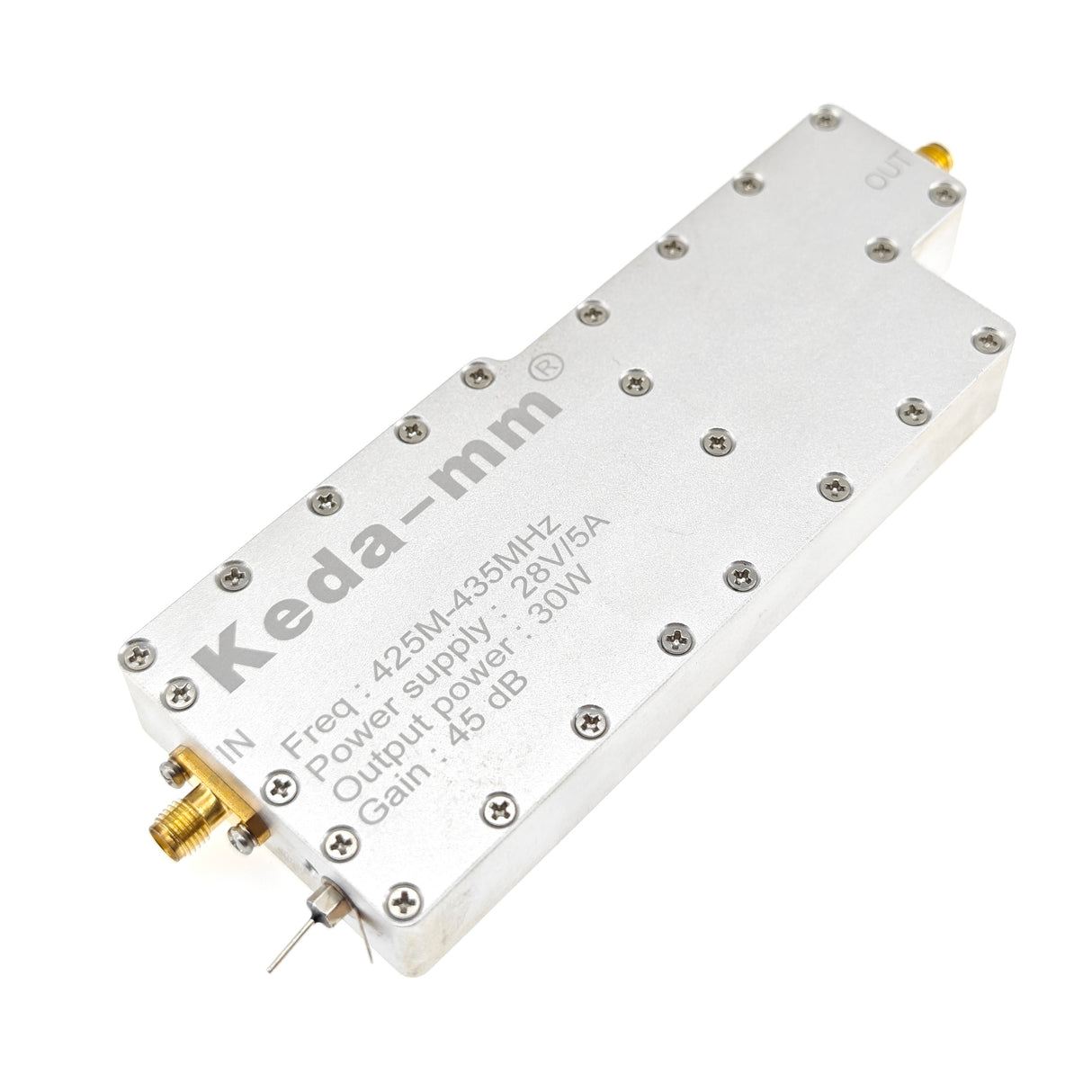
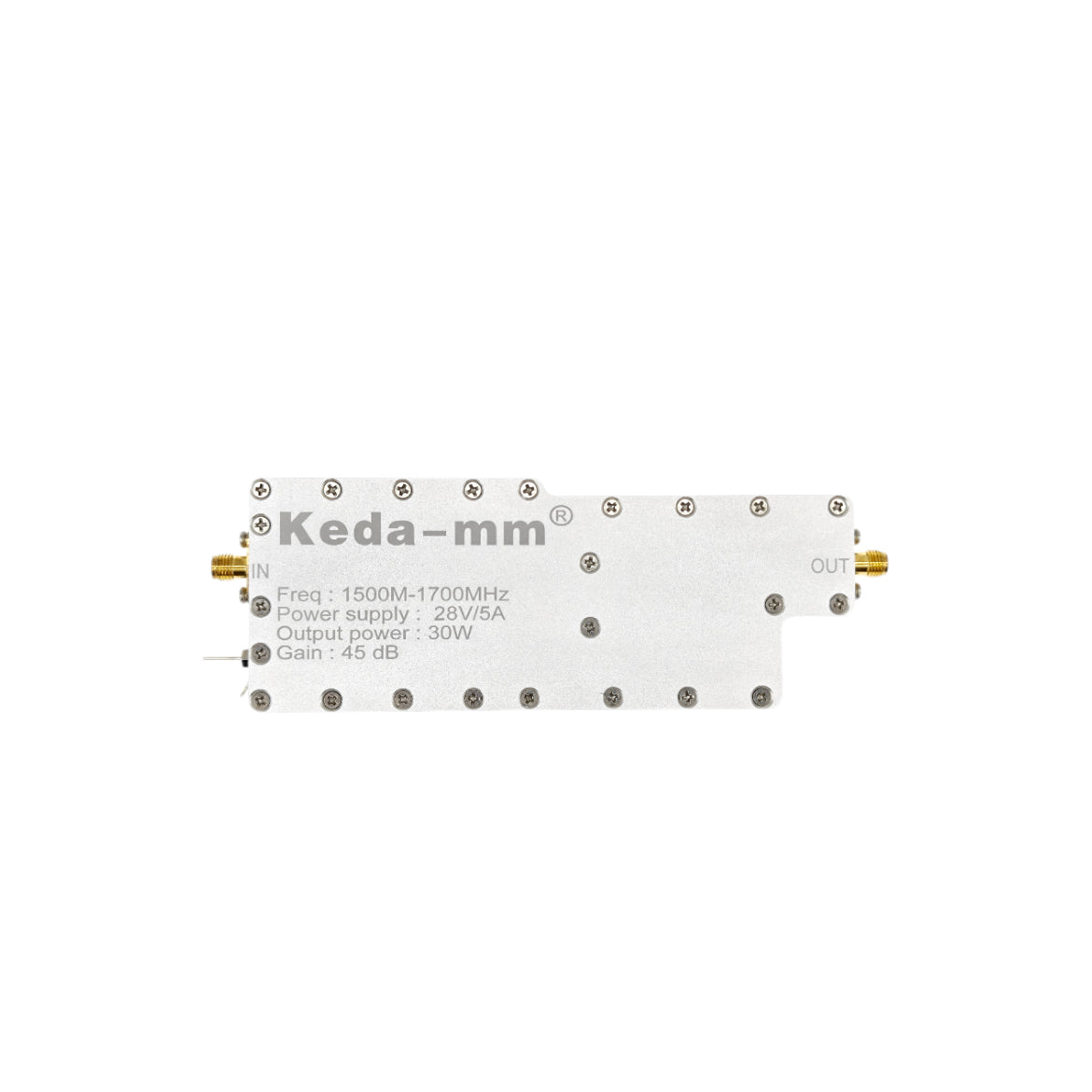
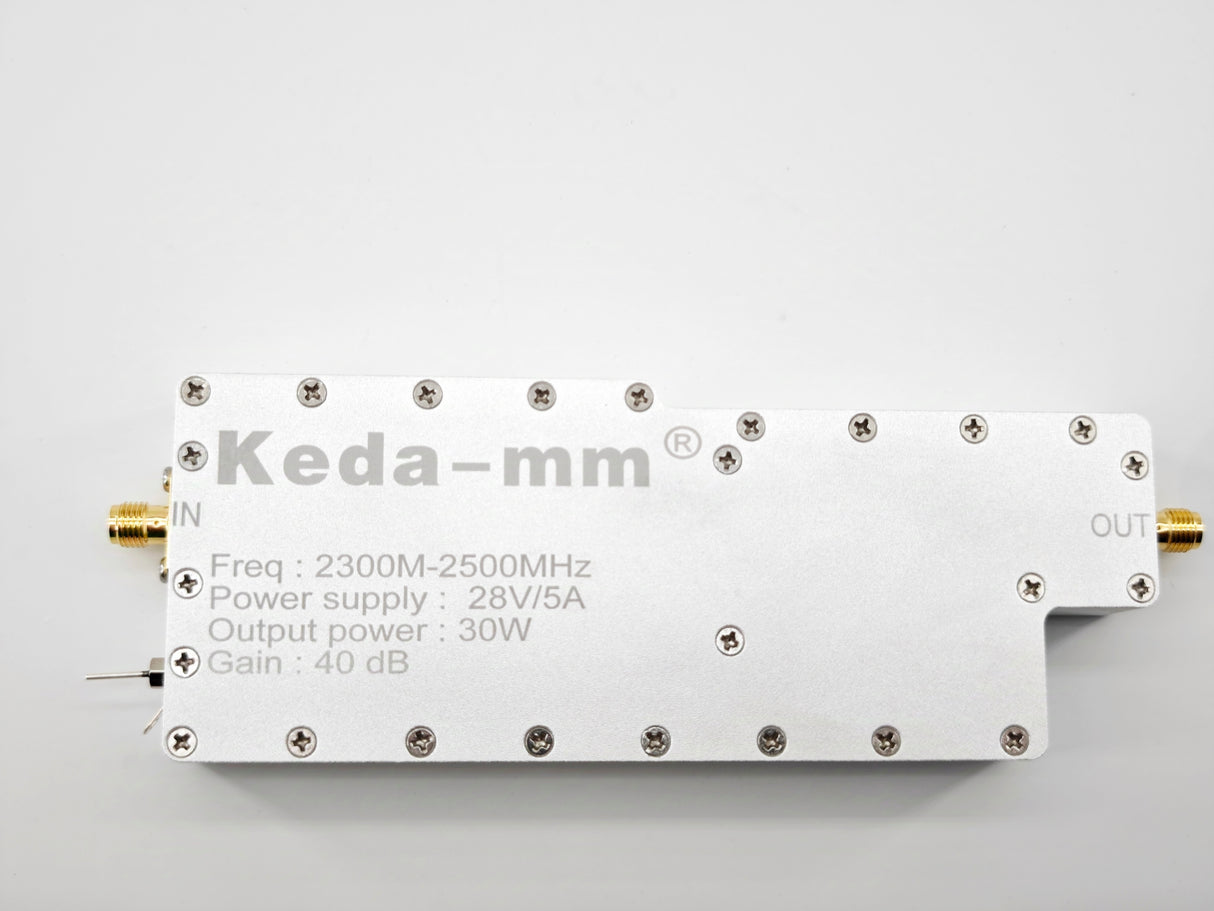
Each model has its own specified operating range. Start with that range, then review the power, gain, electrical supply and enclosure size. The photographs identify module views; the table provides the published specification for each model.
On smaller screens, scroll horizontally to compare all specification columns.
| Model | Frequency RangeMHz | Published Output PowerW | GaindB | Supply SpecificationV / A | Dimensionsmm · as published |
|---|---|---|---|---|---|
| DRD-433MHz-30W-A | 425–435 | 30 | 45 | 28 V / 5 A | 130 × 50 × 16 (±0.1) |
| DRD-900MHz-30W-A | 870–960 | 30 | 40 | 28 V / 5 A | 130 × 50 × 16 (±0.1) |
| DRD-1.2G-30W-A | 1125–1250 | 30 | 45 | 28 V / 5 A | 130 × 50 × 15 (±0.1) |
| DRD-1.6G-30W-A | 1500–1700 | 30 | 45 | 28 V / 5 A | 130 × 50 × 15 (±0.1) |
| DRD-2.4G-30W-A | 2300–2500 | 30 | 40 | 28 V / 5 A | 130 × 50 × 16 (±0.1) |
| DRD-5.2G-50W-A | 5150–5250 | 50 | 40 | 28 V / 6 A | 130 × 50 × 15 (±0.1) |
| DRD-5.8G-50W-A | 5725–5850 | 50 | 40 | 28 V / 6 A | 130 × 50 × 15 (±0.1) |
RF impedance: 50 ΩRF connectors: SMA female
Values are taken from the published model specifications and are not presented as our own measured test results. Confirm the current hardware version and required measurement conditions before ordering. The listed supply specification does not identify an included power adapter or a measured operating-current profile.
Integration Review
Confirm the module at three interfaces.
A frequency match is one part of selection. The RF path, DC supply and mechanical installation need to be reviewed together for the intended research, test or OEM platform.
Signal and load conditions
Specify the working band, input signal level, signal type, required output measurement and connected load. Confirm connector mating and the required power-handling capability of cables, measurement hardware and any antenna configuration.
Supply and control connections
Review the published 28 V supply specification against the selected model. Request the wiring definition, allowable supply range and any control-pin or protection details needed for your equipment.
Enclosure and thermal design
Check the listed dimensions against the available installation space. Confirm mounting-hole positions, connector clearance, cooling requirements and the permitted operating environment before finalizing the enclosure.
OEM Procurement
Send a defined module requirement.
For component buyers assembling their own systems, the inquiry should identify both the module and its installation conditions. Share an existing model reference or the required band, then include the electrical and mechanical constraints that determine suitability.
Tell us whether you need an evaluation sample or a production quantity. Sample availability, pricing, lead time, documents and the final delivery scope are confirmed in the quotation.
- Model and RF requirementTarget model or frequency range, required output specification and input conditions.
- Installation requirementSupply, wiring, control, enclosure space, mounting and cooling constraints.
- Purchase and documentationQuantity, destination, desired delivery date, required drawings and acceptance criteria.
Related Components
Review the rest of the hardware requirement.
Use these pages to review other component families. Any proposed connection needs its own frequency, signal-level, power-handling and interface check.
For receive-side amplification, compare LNA-2-6G, LNA-0.8-12G and LNA-0.8-18G low noise amplifiers.
Selection FAQ
Questions before ordering a module.
Does one model cover all seven frequency ranges?
Each listed model has a separate specified frequency range. Select the model against the actual working band and confirm the current specification for that hardware version.
How should I specify the required output power?
Include the required power definition and the test conditions, such as signal format and duty cycle. The table summarizes the published output specification; performance under your requested conditions needs confirmation.
Is a power supply or cooling assembly included?
The table lists the module supply specification. Power adapters, cooling hardware, cables and other accessories need to be identified in the agreed delivery scope.
Can I request a sample, drawing or model-specific specification?
Yes. Send the target model and intended integration requirement through Contact. The available documents, sample arrangement, quantity, pricing and delivery conditions can then be confirmed.
Will the module connect directly to another listed product?
Share the exact equipment and interface requirement for review. Suitability depends on frequency, signal levels, load, supply, connector and installation conditions; a related product listing alone does not establish compatibility.
Specifications & Quotation
Request a model-specific configuration review.
On Contact, select OEM Modules & Boards and include the model, frequency band, RF requirement, supply, quantity and timeline. We can review the requested module specification and prepare the appropriate procurement response.